
Sending a parcel
Applicable additional services
Applicable additional fees
List of offices/vending machines
Delivery time
Packaging requirements
Collection request
Prohibited shipments
Additional information and references
Sending a parcel
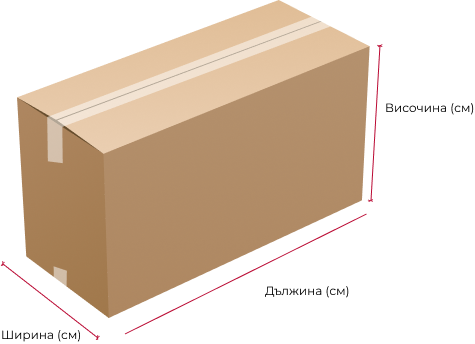
You can send your shipment by requesting a courier to the address, through our client web applicationsMySpeedy or Speedy Market , to generate a waybill, or go to the nearest or most convenient Speedy office for you. Each shipment can consist of only one package with a maximum tariff weight of 10 kg. The greater of the volumetric and physical weight of the packages is charged (1 m³ = 200 kg).
Applicable additional services
Applicable additional fees
Delivery time
10 business days. The indicated time is indicative (the usual transit time to the main cities in the indicated countries). The delivery time does not include the day of collection of the shipment, weekends and public holidays.The delivery time may be extended depending on the following situations: addressed to islands and remote settlements; shipments subject to customs processing; shipments with an outdated/incomplete address or without a contact phone number for the sender and recipient specified by the contracting authority, as well as for shipments from/to a residential address, the indicated delivery time may be extended.Depending on the settlement in Bulgaria where the sender of the shipment is located, the delivery time may be extended by one business day.
Packaging requirements
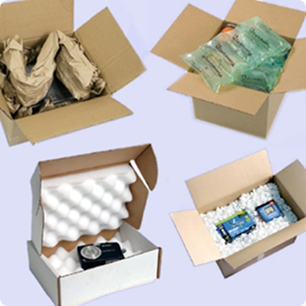
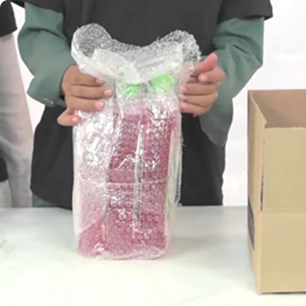
Every international shipment must be placed in a sturdy cardboard box /box or carton/ by the sender. You can use the original shipping packaging of the goods if you keep it. It should be suitable for transport and provide protection - unlike commercial packaging. Before using them, make sure that the outer packaging, packaging tapes and seals (inner packaging) are secure. If they are damaged or unsuitable, before handing over the shipments for transport, any malfunction must be repaired or other materials must be used. You should use a soft seal for light goods and a harder one for heavy goods, so that they can absorb unwanted impacts and prevent possible punctures.1. Instructions for reliable packaging:• All sides of the package must be protected and reinforced. The maximum possible load during transport (machine sorting, overloading, driving over bumps in the road and stopping, take-off and landing) is approximately equal to a free fall from a height of 80 cm onto a hard surface. The outer and inner packaging must withstand 4-5 times the weight of your shipment and protect your goods.• The goods must not move freely in the outer packaging of the package. Always use appropriate inner packaging for packaging and sealing each item in your package.• If you are packaging different products at the same time, the sealing must be tailored and suitable for the most fragile of them.• If there are glass jars in the contents, they must be packed in a new, non-depreciated jar box made of 5 layers of corrugated cardboard, offered by Speedy, with the maximum quantity being 1 jar in 1 shipment.• In case the shipment contains wine bottles, they must be packed in a new, non-depreciated wine box, made of 3 layers of corrugated cardboard and polystyrene, offered by Speedy, with a maximum quantity of 3 bottles in 1 shipment.• Fragile products must not come into contact with the outer packaging.• Do not over-seal the gaps in the package. In factory transport packaging, gaps are intentionally left that absorb the impact of forces during transport and they are not transmitted to your goods.• No part of the contents of the shipment must be removed from the box. In such cases, use a larger box and additional sealing.• The outer packaging must be securely sealed and all edges must be reinforced with packaging tape. We also recommend using transport foil2. It is extremely important that the packaging is appropriate for the weight of the contents in such a way as to protect your goods during the entire transport. The packaging must be suitable for handling with loading and sorting machines. During transportation to your recipient, your shipments will be reloaded several times and will travel several hundred, and in some cases thousands of kilometers by land or air transport.• Individual packages joined together with packing tape as one package are not accepted for transport. Such packages must be placed in a larger and sufficiently strong cardboard box.• Duffels, bags, sacks, bags, travel bags, suitcases and tubes are not accepted for transport. Such shipments must be additionally placed in a strong cardboard or other parallelepiped-shaped box.• Packages containing documents for the DPD ECONOMY and Air Express services must be packed in a hard cardboard envelope or in a small box.• Liquids may only be transported in special transport containers that are secured against leakage. These containers must be placed in a protective film or envelope, but not in a cardboard box. Leakage of liquids from inadequately packaged shipments can cause damage to your goods and the goods of other customers.3. 18 Useful packing tips:• Fragile and Caution stickers are not a substitute for reliable inner and outer packaging. They are for informational purposes only.• Choose an appropriate size outer packaging for the items you are shipping. Empty packaging can cause shifting and damage, and overly full packaging can cause the package to burst or the contents to be damaged by pressure.• Always use high-quality materials for packing your shipments. Consider strength, cushioning, and durability when choosing packaging materials. Use packing chips, polyethylene foam, bubble wrap, air-filled bags, or shredded paper to seal the individual items inside the shipment.• Choose sturdy boxes made of good quality five-ply corrugated cardboard with an outer lining.• Use cushioning materials (packaging chips, shredded paper, polyethylene foam, inflated air bags, bubble wrap, etc.) to prevent individual items in the package from unnecessary movement.• Do not allow the contents to move inside the package. Fragile items must be individually wrapped with several layers of soft inner packaging, so that they do not touch each other, and between them provide a sufficient amount of materials to seal the free space.• Use wide and strong packing tape to seal the box.• If you have a stretch wrapping machine, use it to wrap the box (outer packaging).• Place the individual items in the center of the package so that they do not touch the outer walls. Then seal the item on all sides. Do not leave empty spaces.• Place powders, loose contents or those with a liquid consistency in separate strong plastic bags. then seal them tightly and place in individual, accurate-sized cardboard boxes.• If you are sending gifts, do not rely on the packaging in which you bought them from the retailer. Repackage them properly. Many goods are sold in attractive packaging that is not suitable for transportation.• Use triangular boxes, such as for a bottle, to pack cards, drawings and paintings.• Protect your discs, audio and video media with soft material for sealing, around each individual item.• Always use cardboard dividers inside the shipment when sending flat, fragile materials. They will separate the items from each other, prevent them from touching each other, as well as the walls of the outer packaging and protect them.• It is also possible to use an already used carton. But be sure to make sure that it is completely sound, in good condition, not deformed and will not give in. Remove all labels and stickers from it.• Do not use substandard or damaged cardboard packaging.• Do not use cloth or fabric bags.• Do not send dangerous or prohibited goods, as you are liable for them.
1
1