External Packaging
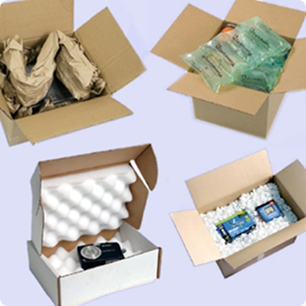
Every international shipment must be placed in a strong cardboard package (box or carton) provided by the sender. You may use the product’s original transport packaging if you still have it. It should be suitable for transport and provide protection—unlike retail packaging. 1
The outer packaging must be securely sealed, and all edges reinforced with packing tape. It is extremely important that the packaging matches the weight of the contents to protect your goods throughout the entire transport process. The packaging should be suitable for handling with loading and sorting machines. During transport to your recipient, your shipments may be reloaded several times and travel hundreds or even thousands of kilometers by land or air. 2
Separate parcels/packages joined together with tape as a single shipment are not accepted for transport. Such packages must be placed inside one larger and sufficiently strong cardboard box or carton. 3
Bundles, bags, sacks, duffel bags, travel bags, suitcases, and tubes are not accepted for transport. Such shipments must be additionally placed in a sturdy cardboard or other rectangular box. 4
Packages containing documents for DPD ECONOMY and Air Express services must be packed in a rigid cardboard envelope or in a properly sized box. 5
Choose an outer box that fits the items you are sending. Boxes that are too empty can cause shifting and damage, while overfilled ones risk bursting or damaging the contents due to pressure. 6
No part of the shipment’s contents should protrude from the box. In such cases, use a larger box and additional padding. 7
It is recommended to choose sturdy boxes made of five-layer corrugated cardboard of good quality with an outer coating. 8
Use wide, strong packing tape to seal the box or carton. 9
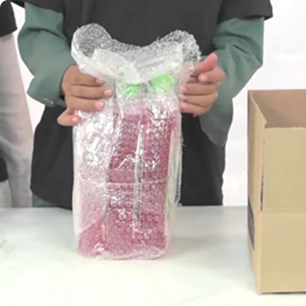
All sides of the package must be protected and reinforced. The maximum load during transport (machine sorting, reloading, bumps during movement, braking, takeoff, and landing) is approximately equivalent to a free fall from a height of 80 cm onto a hard surface. The outer and inner packaging must withstand 4–5 times the weight of your shipment and protect its contents. 10
When sending gifts, do not rely on the commercial packaging in which you bought them. Repack them properly. Many products are sold in attractive but unsuitable packaging for transport. 11
Do not use nonstandard or damaged cardboard boxes. 12
Do not use fabric or textile bags. 13
Use five-layer BC-type corrugated cardboard with a soft kraft or polyethylene foam inner lining to pack maps, drawings, and paintings. 14
You may use previously used cartons, but make sure they are completely strong, in good condition, not deformed, and won’t give way. Remove all old labels (waybills) and stickers. 15
“Fragile” and “Attention” stickers do not replace proper inner and outer packaging. They are only informational. 16